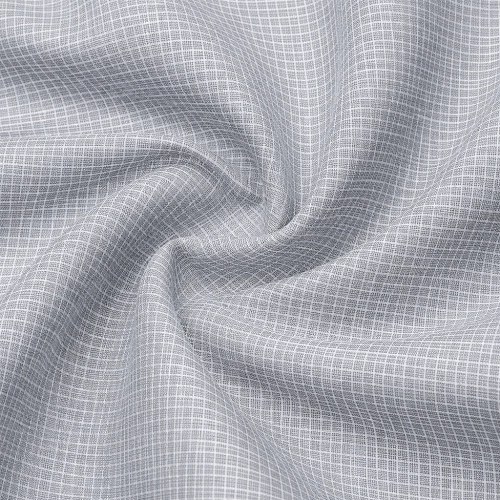
Polyester grid fabric is a specialized textile characterized by a regular, grid-like construction formed through weaving, knitting, or bonding polyester filaments into intersecting patterns. This geometry is not merely aesthetic—it is engineered to deliver specific mechanical, thermal, and functional properties. As a result, polyester grid fabric is widely used across industries ranging from apparel and outdoor gear to industrial filtration, geotextiles, medical supports, and architectural membranes.
1. Material Composition and Fiber Science
Polyester grid fabric is primarily produced from polyethylene terephthalate (PET) fibers. Key intrinsic properties of PET that influence grid fabric performance include:
- High tensile strength and dimensional stability
- Low moisture regain (≈0.4%), enabling quick drying
- Chemical resistance to weak acids, solvents, and oils
- Thermoplastic behavior, allowing heat-setting and shape retention
Depending on the application, manufacturers may use:
- Continuous filament yarns for strength and smoothness
- Texturized yarns for bulk and flexibility
- High-tenacity polyester for load-bearing or reinforcement roles
Additives such as UV stabilizers, flame retardants, or antimicrobial agents may be incorporated at the polymer or finishing stage.
2. Grid Architecture and Fabric Construction
The defining feature of polyester grid fabric is its open or semi-open lattice structure, which can vary significantly in scale and geometry.
Common Grid Configurations
- Square or rectangular grids – balanced strength in warp and weft
- Diamond grids – enhanced multi-directional stress distribution
- Hexagonal grids – optimized airflow and weight reduction
Manufacturing Techniques
- Warp knitting (e.g., Raschel knitting)
Produces stable grids with controlled elasticity and minimal unraveling.
- Woven grid structures
Offer superior tensile strength and abrasion resistance.
- Nonwoven grid laminates
Combine polyester grids with films or scrims for reinforcement.
Grid size, yarn denier, and intersection bonding method directly affect mechanical behavior and end-use suitability.
3. Mechanical and Physical Performance
Polyester grid fabric is engineered to balance openness with strength.
Key Performance Metrics
- Tensile strength: High load-bearing capacity relative to weight
- Tear resistance: Grid intersections prevent crack propagation
- Dimensional stability: Minimal shrinkage under heat and stress
- Abrasion resistance: Especially strong in woven grid variants
The open structure reduces material usage while maintaining structural integrity, making it ideal for lightweight yet durable systems.
4. Thermal, Environmental, and Chemical Behavior
- Thermal resistance: Stable up to ~150–170°C in continuous use
- UV resistance: Moderate by default; significantly improved with stabilizers
- Weatherability: Resistant to mildew, rot, and hydrolysis
- Chemical exposure: Performs well in alkaline environments but degrades under strong acids
These properties allow polyester grid fabric to function reliably in outdoor, industrial, and chemically active environments.
5. Functional Advantages of Grid Design
The grid structure provides benefits unattainable with solid fabrics:
- Ventilation and airflow
- Reduced weight without proportional strength loss
- Transparency or semi-transparency
- Enhanced flexibility and conformability
- Drainage and filtration capability
These attributes make polyester grid fabric especially valuable in performance-driven applications.
6. Application Areas
Textiles and Apparel
- Reinforcement panels in sportswear and backpacks
- Mesh linings and structural supports
Industrial and Technical Uses
- Conveyor belts and reinforcement scrims
- Filtration substrates and sieving media
Construction and Infrastructure
- Geotextiles for soil stabilization
- Roofing membranes and architectural shading
Medical and Ergonomic Products
- Orthopedic supports and braces
- Breathable seating and mattress structures
7. Limitations and Engineering Trade-Offs
Despite its versatility, polyester grid fabric has constraints:
- Lower insulation compared to dense textiles
- Potential snagging in coarse grid designs
- UV degradation if untreated in long-term outdoor use
- Limited biodegradability, raising sustainability concerns
Engineers must carefully select grid parameters and finishes to mitigate these issues.
8. Sustainability and Future Developments
Advances in polyester grid fabric increasingly focus on sustainability and performance enhancement:
- Recycled PET (rPET) grids from post-consumer plastics
- Hybrid grids combining polyester with bio-based fibers
- Smart textiles, integrating conductive or sensing elements
- Advanced coatings for self-cleaning, antimicrobial, or solar-reflective properties
These innovations are expanding the role of polyester grid fabric in circular and high-tech material systems.
Polyester grid fabric represents a highly engineered textile solution where geometry, polymer science, and manufacturing precision converge. Its grid architecture enables exceptional strength-to-weight ratios, airflow, and adaptability across diverse technical fields. While challenges remain—particularly in sustainability and UV exposure—ongoing material and process innovations continue to elevate polyester grid fabric as a cornerstone material in modern technical textiles.